
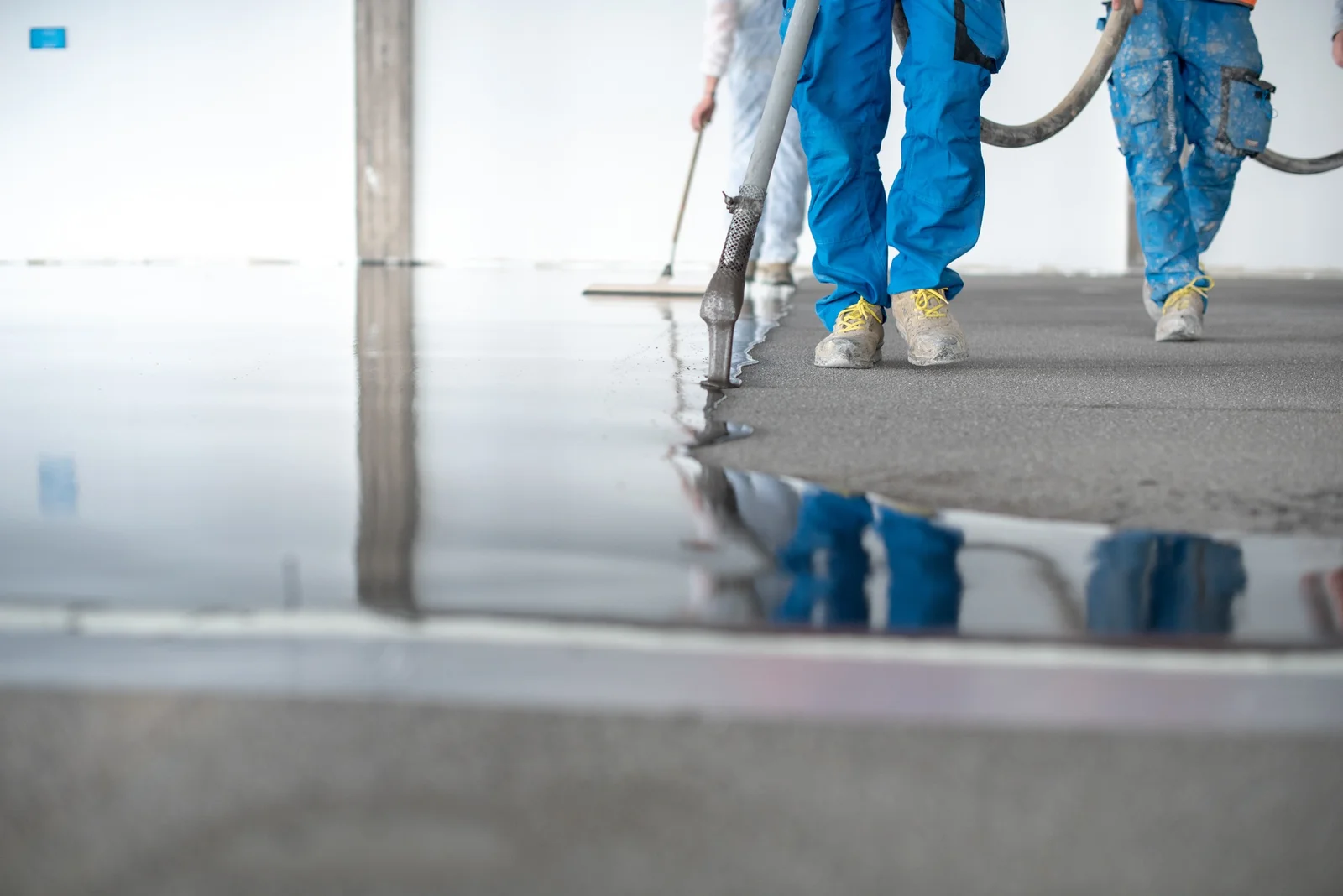
When it comes to flooring, choosing between screed and self-leveling compound can be confusing. Both are used to create smooth, level surfaces, but they differ in application method, thickness, drying time, and suitable projects. Understanding these differences is crucial for selecting the right material for your flooring needs.
Screed is a manually applied layer of sand, cement, or other aggregates that provides a durable, even surface while a self-leveling compound is a liquid material that automatically spreads out and levels itself. The screed is thicker and more suitable for large areas, whereas the self-leveling compound is thinner and ideal for fast, precise leveling in smaller projects.
Now, let’s break down the four main differences between these two materials.
Screed: Applied manually using a trowel or screeding tool. Requires skilled labor to ensure an even finish.
Self-Leveling Compound: Poured onto the surface and spreads automatically, needing minimal manual work.
Which One is Better?
Screed: Typically applied at a thickness of 50mm or more, making it a strong base for heavy loads.
Self-Leveling Compound: Usually under 10mm thick, designed for fine surface leveling.
Which One is Better?
Screed: Takes several days or even weeks to fully cure, depending on thickness.
Self-Leveling Compound: Dries in a few hours to a day, allowing for faster flooring installation.
Which One is Better?
Screed: Used for large commercial areas, industrial floors, and heavy-load environments.
Self-Leveling Compound: Ideal for residential projects, underfloor heating systems, and quick surface repairs.
Which One is Better?
| Feature | Screed | Self-Leveling Compound |
|---|---|---|
| Application | Manual, requires skill | Poured, levels itself |
| Thickness | 50mm+ | Under 10mm |
| Drying Time | Several days/weeks | A few hours to 1 day |
| Best For | Large, heavy-duty projects | Small, quick leveling tasks |
| Durability | Very strong and long-lasting | Smooth but less structural strength |
| Ease of Use | Labor-intensive | Quick and simple |
If you’re working on a high-traffic, commercial project, go with screed. If you need speed and convenience, choose self-leveling compound.
When using self-leveling compounds, low-viscosity Hydroxypropyl Methylcellulose (HPMC) is a key additive that improves performance.
✅ Enhances flowability – Ensures even distribution across the surface.
✅ Prevents cracking and shrinkage – Improves durability.
✅ Improves water retention – Extends working time for better application.
✅ Boosts adhesion – Creates a stronger bond with the subfloor.
Using high-quality HPMC in self-leveling compounds ensures smoother application, better durability, and improved results.
Choosing between screed and self-leveling compound depends on your project needs. Screed is thicker, stronger, and suited for large projects, while self-leveling compound is fast-drying and perfect for precise surface leveling. If you’re working with self-leveling compounds, using low-viscosity HPMC can significantly enhance the results.
💡 Need help selecting the right materials for your flooring project? Contact us today!