
Was ist Celluloseether? Anwendungen, Vorteile und Einsatzgebiete
Comprehensive Technical Reference for Modern Industries
Cellulose ether is one of the most versatile functional polymers used across modern industries—from construction materials and pharmaceutical excipients to coatings, personal care, ceramics, and oilfield chemicals.
Its combination of water solubility, viscosity modification, film-forming ability, and excellent water retention makes it an essential ingredient in hundreds of formulations. The unique chemical structure and customizable properties of cellulose ethers enable them to serve critical functions in applications ranging from tile adhesives and wall putty to controlled-release pharmaceuticals and water-based paints.
As a global supplier of construction and chemical additives, Landu provides high-performance cellulose ethers such as HPMC, HEMC, HEC, MC, und CMC, tailored for applications including tile adhesives, wall putty, gypsum-based products, EIFS/ETICS systems, and water-based coatings.
This comprehensive guide explains what cellulose ether is, how it is made, key performance indicators like DS and MS, major product types, and its practical uses across industries.
What Is Cellulose Ether?
Cellulose ethers are water-soluble polymer derivatives obtained by chemically modifying natural cellulose. Cellulose itself is a renewable raw material sourced primarily from wood pulp and cotton fibers.
Through etherification reactions, the hydroxyl groups (–OH) on cellulose chains are replaced with functional substituent groups such as methyl, hydroxyethyl, hydroxypropyl, carboxymethyl, and ethyl. This chemical transformation disrupts the native hydrogen-bond network within cellulose, giving rise to new functional properties that make these materials indispensable across multiple industries.
💧Water Solubility
Modified structure enables dissolution in aqueous systems
🌊Viscosity Enhancement
Precise control of rheological behavior in formulations
🌡️Thermal Gelation
Reversible gel formation at elevated temperatures
💦Water Retention
Critical for construction and coating applications
🎬Film-Forming Ability
Creates protective and functional surface layers
⚗️Rheology Modification
Optimizes flow and application characteristics
These features make cellulose ether indispensable in construction mortars, pharmaceuticals, coatings, personal care, ceramics, and oil & gas applications.
Chemical Structure: The Anhydroglucose Unit (AGU)
All cellulose ethers share a common structural foundation: the β-D-anhydroglucose unit. Understanding this molecular architecture is essential to comprehending how different cellulose ethers achieve their unique performance characteristics.
Each AGU contains three reactive hydroxyl groups located at specific positions on the glucose ring structure. These positions are designated as C-2, C-3, and C-6, and each plays a distinct role in determining the final properties of the cellulose ether product.
C-2 PositionPrimary site for methyl substitution
C-3 PositionSecondary hydroxyl group modification
C-6 PositionMost reactive site for etherification
During etherification, these hydroxyl groups are substituted with ether groups. The type and number of substituents determine the cellulose ether's solubility profile, thermal gelation temperature, viscosity behavior, water retention ability, and compatibility with cement, gypsum, or pharmaceutical actives.
This is why HPMC behaves differently than HEC or CMC, even though all share the same cellulose backbone. The specific pattern and degree of substitution at these three positions creates the functional diversity that makes cellulose ethers so versatile.
DS and MS: Performance-Defining Indicators
Two fundamental parameters describe the degree of modification in cellulose ethers and directly determine their performance characteristics across all applications.
📊Degree of Substitution (DS)
DS represents how many hydroxyl groups per AGU are substituted with ether groups.
Range: 0–3 (maximum three OH groups per AGU)Impact: Higher DS generally increases hydrophilicity or hydrophobicity depending on the substituent group type. This parameter influences gel temperature, solubility, stability, and enzyme resistance.
Typical DS Values:
- CMC: 0.8–1.2
- HPMC / HEMC: 1.6–1.8
- HEC: 2.2–2.8
Molar Substitution (MS)
MS is particularly relevant for hydroxyalkyl cellulose ethers, where each substituent can add additional hydroxyl groups that can themselves be further substituted.
Key Characteristic: MS can exceed 3 (unlike DS)Impact: Higher MS values improve water solubility, viscosity stability across temperature ranges, and film flexibility. This makes MS a critical parameter for applications requiring consistent performance under varying conditions.
The ability of MS to exceed 3 occurs because hydroxyalkyl substituents introduce new hydroxyl groups that can undergo additional substitution reactions, creating branched side chains.
Together, DS and MS directly determine the performance of cellulose ether in construction mortar, pharmaceuticals, coatings, and other applications. Manufacturers like Landu carefully control these parameters during production to ensure consistent product performance tailored to specific application requirements.
How Cellulose Ethers Are Manufactured
Industrial production of cellulose ether is a sophisticated chemical process involving precise control of reaction conditions, reagent ratios, and purification steps to achieve the desired DS/MS levels and performance characteristics.
1Alkalization (Mercerization)
Natural cellulose fibers are treated with sodium hydroxide (NaOH) solution. This critical first step serves multiple purposes: it swells the cellulose fibers, disrupts the crystalline structure, and activates the hydroxyl groups, making them more reactive toward etherifying agents. The alkalization process also improves the accessibility of the cellulose chains, ensuring uniform modification throughout the material.
Key Functions: Fiber swelling, hydroxyl activation, improved reactivity 2Etherification
Activated cellulose reacts with specific etherifying agents under carefully controlled temperature and pressure conditions. The choice of etherifying agent determines the final product type and its properties. Common etherifying agents include:
Methyl chloride → Methyl Cellulose (MC) / HPMC Propylene oxide → Hydroxypropyl modification Ethylene oxide → Hydroxyethyl modification Chloroacetic acid → Carboxymethyl Cellulose (CMC) Reactions occur under controlled temperature and pressure to achieve precise DS/MS levels tailored to application requirements. 3Neutralization
After etherification is complete, residual alkali must be neutralized to stop the reactions and stabilize the polymer. This step typically involves the addition of acid (such as hydrochloric acid or acetic acid) to bring the pH to a neutral or slightly acidic range. Proper neutralization is essential to prevent continued reactions during storage and to ensure product stability.
Purpose: Reaction termination, pH adjustment, product stabilization 4Purification and Drying
The final stage involves removing reaction byproducts, salts, and unreacted materials to achieve the required purity level. Purification methods vary depending on the grade and intended application:
- Hot water washing: Standard grade products
- Water/solvent washing: High-purity pharmaceutical grades
- Filtration: Removal of particulates and gel particles
- Drying: Spray drying or fluid bed drying to control moisture content
- Milling and particle-size control: Ensuring consistent dissolution and dispersion characteristics
As a professional cellulose ether supplier, Landu follows rigorous production and quality standards to ensure consistent viscosity, purity, and performance tailored to different industry requirements. Advanced process control systems monitor critical parameters throughout production, ensuring batch-to-batch consistency and reliability.
Key Types of Cellulose Ethers
The cellulose ether family encompasses several distinct product types, each optimized for specific applications through careful control of substituent groups and modification levels.
🔷Hydroxypropyl Methyl Cellulose (HPMC)

HPMC is the most widely used cellulose ether in construction materials and pharmaceuticals, offering an excellent balance of water retention, thermal gelation, and film-forming properties.
Applications:
- Construction materials (tile adhesive, wall putty, EIFS/ETICS)
- Pharmaceuticals (controlled-release tablets, capsules)
- Detergents and cleaning products
- Water-based coatings and paints
Key Properties:
- Excellent water retention capacity
- High thermal gelation temperature (58-90°C)
- Superior workability and slip resistance in mortars
- Ideal binder and film-former
- Good compatibility with other additives
Learn more about Landu's HPMC products
🔶Methyl Cellulose (MC)
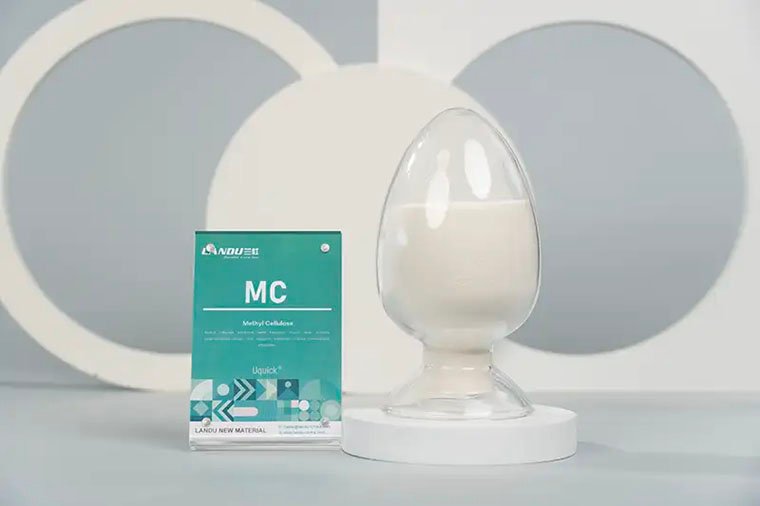
MC is characterized by its strong thermal gelation behavior and cold-water solubility, offering excellent thickening and binding performance.
Applications:
- Food industry (ice cream, bakery)
- Construction mortars
- Pharmaceutical formulations
- Wallpaper adhesives
Key Properties:
- Cold-water solubility
- Strong thermal gelation (50–55°C)
- Good thickening and binding
- Excellent film formation
- Surface activity
Hydroxyethyl-Zellulose (HEC)
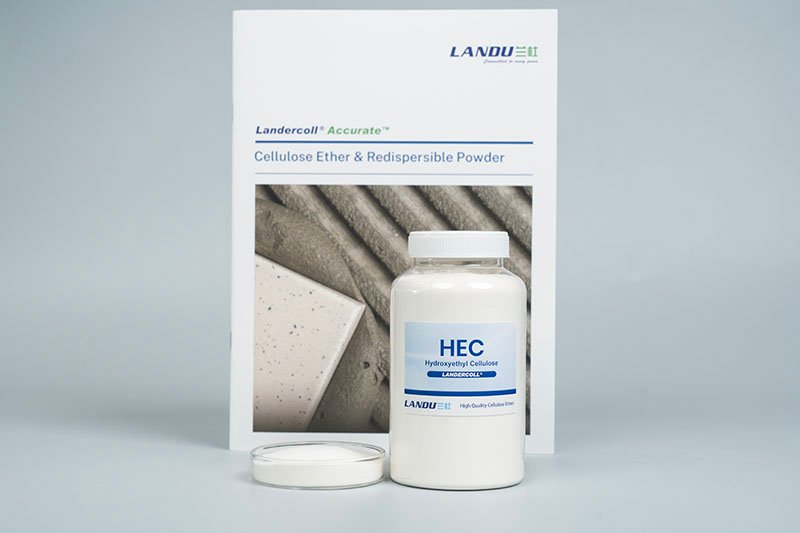
HEC is a non-ionic cellulose ether valued for excellent rheology control and compatibility with diverse formulation ingredients.
Applications:
- Water-based paints and coatings
- Personal care products (shampoos, lotions)
- Oilfield chemicals (drilling fluids)
- Adhesives
Key Properties:
- Soluble in hot and cold water
- Excellent rheology control
- Good salt tolerance
- No thermal gelation
- Pseudoplastic flow behavior
Explore Landu's HEC solutions
🔴Carboxymethyl Cellulose (CMC)

CMC is an anionic cellulose ether with strong thickening, stabilizing, and binding capabilities across many industries.
Applications:
- Detergents (anti-redeposition agent)
- Ceramics (binder, plasticizer)
- Oil drilling (fluid loss control)
- Food industry (stabilizer, thickener)
- Paper making
Key Properties:
- Anionic polymer
- Strong thickening ability
- Excellent stabilizing properties
- Good water retention
- pH-dependent solubility
Properties of Cellulose Ethers
Cellulose ethers exhibit several crucial performance characteristics that make them indispensable across multiple industries. Understanding these properties enables optimal selection and application.
Solubility
The solubility behavior of cellulose ethers is primarily determined by the nature of substituent groups and the DS/MS levels achieved during manufacturing. Polar substituent groups generally enhance water solubility by disrupting the hydrogen bonding network of native cellulose and introducing hydrophilic functional groups. Conversely, larger or more hydrophobic substituents can reduce solubility or shift it toward organic solvents.
Polar Groups:Hydroxypropyl, hydroxyethyl, and carboxymethyl groups significantly improve water solubility
Larger Groups:Bulky substituents may reduce solubility or require elevated temperatures for dissolution
DS/MS Impact:Higher substitution generally improves solubility up to an optimal point
Viscosity Behavior
Viscosity is one of the most important functional properties of cellulose ethers, directly impacting their performance in formulations. The viscosity behavior is complex and influenced by multiple interrelated factors that must be carefully controlled in both production and application.
Key Influencing Factors:
- Concentration: Viscosity increases exponentially with cellulose ether concentration, following power-law relationships
- Temperature: Most cellulose ethers show decreased viscosity with increasing temperature, except near gel points
- Polymer Chain Length: Longer chains (higher molecular weight) produce higher viscosity solutions
- Presence of Electrolytes: Salts can significantly affect viscosity, particularly for ionic cellulose ethers like CMC
- pH: Affects ionic cellulose ethers more strongly than non-ionic types
- Shear Rate: Many cellulose ether solutions exhibit pseudoplastic (shear-thinning) behavior
Viscosity stability is especially important in tile adhesives, joint compounds, and water-based coatings, where consistent rheology ensures uniform application and performance. Landu provides cellulose ethers with precisely controlled viscosity grades to meet specific application requirements.
Water Retention
Water retention is a critical property in cement and gypsum formulations, where it serves multiple essential functions. Cellulose ethers form a protective film around cement particles and within the mortar matrix, significantly reducing water evaporation and absorption by substrates.
Key Benefits in Construction Materials:
⏱️ Prevent Premature DryingMaintains optimal moisture for complete hydration reactions
⚡ Improve HydrationEnsures sufficient water availability for cement/gypsum setting
🕐 Enhance Open TimeExtends working time for tile adhesives and renders
🎯 Improve WorkabilityBetter spreadability, consistency, and application properties
The water retention capacity varies among different cellulose ether types, with HPMC generally offering the highest performance in construction applications.
Film-Forming Ability
Cellulose ethers can form continuous, transparent, and flexible films when solutions are dried. This property is exploited across multiple applications where protective or functional surface layers are required.
Tablet Coating:Pharmaceutical tablets are coated with HPMC films for taste masking, moisture protection, and controlled release
Paint Performance:Film formation contributes to paint adhesion, durability, and surface appearance
Surface Protection:Protective films prevent moisture ingress and improve material durability
Thermal Gelation
MC and HPMC exhibit unique reversible gelation behavior at elevated temperatures. As temperature increases, these cellulose ethers undergo a sol-gel transition, where the solution transforms into a gel structure. This phenomenon is particularly valuable in construction mortars.
Mechanism: At lower temperatures, cellulose ether molecules are well-hydrated and dispersed. As temperature rises, the hydrophobic methyl groups become more prominent, causing polymer chains to associate and form a three-dimensional gel network. Upon cooling, the gel reverts to a solution state.
Benefits in Construction:
- Improved sag resistance at elevated temperatures
- Enhanced water retention during hot weather application
- Better workability control across temperature ranges
- Reduced material slump on vertical surfaces
The gelation temperature can be adjusted through DS/MS control and selection of substituent groups, allowing manufacturers like Landu to tailor products for specific climate conditions and application requirements.
Safety and Biodegradability
Cellulose ethers are derived from renewable natural cellulose and are generally recognized as safe for use across multiple industries. Their environmental profile and safety characteristics make them preferred choices in applications where human contact or environmental impact is a concern.
✅ Non-ToxicSafe for use in food, pharmaceuticals, and personal care products
🌱 BiodegradableBreaks down naturally in the environment without harmful residues
🌍 Environmentally SafeDerived from renewable resources with minimal environmental impact
📋 Regulatory ApprovedWidely accepted and approved by regulatory agencies worldwide
Industrial Applications of Cellulose Ethers
Cellulose ethers serve critical functions across diverse industries, each leveraging specific properties to solve unique formulation challenges and enhance product performance.
🏗️Construction Materials
Cellulose ether is indispensable in modern construction chemistry, serving as a multifunctional additive that significantly improves the performance, workability, and durability of cement-based and gypsum-based materials. The construction industry represents the largest application segment for cellulose ethers globally.
Key Construction Applications:
FliesenkleberEnhanced bond strength, extended open time, improved slip resistance
WandspachtelBetter workability, crack resistance, and surface finish
EIFS/ETICS Base CoatsSuperior adhesion, flexibility, and weather resistance
Gypsum-Based PlastersImproved water retention, reduced shrinkage, better surface quality
Self-Leveling CompoundsControlled flow, reduced segregation, uniform surface
Cement MortarsEnhanced workability, water retention, and bond strength
Repair MortarsImproved adhesion, durability, and crack resistance
GroutsBetter flow, reduced bleeding, improved strength development
Performance Benefits:
💧 Strong Water RetentionPrevents premature drying and ensures complete hydration of cement or gypsum. This is particularly critical in hot weather, on absorbent substrates, or in thin-layer applications where rapid moisture loss can compromise performance.
⏱️ Improved Open TimeExtends the working time during which tiles can be adjusted or mortar can be applied, reducing waste and improving installation quality, especially important in large-scale projects.
🎯 Better WorkabilityImproves spreadability, trowelability, and ease of application. Cellulose ethers provide smooth, consistent texture and reduce the effort required for application, enhancing productivity.
🛡️ Anti-Sag and Anti-Slip PerformanceProvides excellent sag resistance for wall applications and prevents tile slippage during installation, ensuring proper positioning and reducing installation failures.
📊 Uniform RheologyEnsures consistent viscosity and flow behavior across batches and application conditions, resulting in predictable performance and reduced quality variations.
As a construction additive supplier, Landu provides a complete portfolio of cellulose ethers specifically formulated to optimize mortar performance. Our technical team works closely with customers to select the appropriate viscosity grade, DS/MS specification, and dosage levels for each application.
💊Pharmaceuticals
In the pharmaceutical industry, cellulose ethers (particularly HPMC, MC, and HEC) serve as essential excipients that enable controlled drug delivery, improve tablet manufacturing, and enhance formulation stability. Their safety profile, regulatory acceptance, and functional versatility make them indispensable in modern pharmaceutical development.
Key Pharmaceutical Functions:
Tablet BindersProvide cohesion during tablet compression, ensuring adequate mechanical strength and preventing tablet friability or breakage during handling and packaging.
Controlled-Release AgentsCreate matrix systems that control drug release rates through swelling, diffusion, and erosion mechanisms, enabling once-daily or extended-release formulations.
Film FormersForm protective coatings on tablets and capsules for taste masking, moisture protection, enteric release, or aesthetic purposes.
Suspension StabilizersPrevent settling of solid particles in liquid formulations, ensuring uniform drug distribution and consistent dosing.
Viscosity ModifiersControl the rheological properties of liquid and semi-solid formulations such as syrups, suspensions, and topical gels.
Emulsion StabilizersImprove the stability of oil-in-water emulsions in creams and lotions.
Why Cellulose Ethers Excel in Pharmaceuticals:
- Safety: Non-toxic, non-irritating, and biocompatible with excellent safety profiles established through decades of use
- Regulatory Compliance: Listed in major pharmacopeias (USP, EP, JP, ChP) with well-defined specifications and testing methods
- Chemical Stability: Resistant to enzymatic degradation and compatible with most active pharmaceutical ingredients
- Functional Versatility: Single excipient can serve multiple functions, simplifying formulation development
- Reproducible Performance: Consistent batch-to-batch quality ensures reliable drug product performance
Pharmaceutical-grade cellulose ethers must meet stringent purity requirements, including low levels of heavy metals, microbial contamination, and residual solvents. Landu supplies pharmaceutical-grade cellulose ethers that comply with international pharmacopeia standards.
🎨Lacke & Beschichtungen
In the coatings industry, HEC and HPMC serve as essential rheology modifiers and thickeners for water-based paint systems. They provide critical performance benefits that enhance both application properties and final film quality.
Key Performance Benefits:
Rheology ModificationProvides pseudoplastic (shear-thinning) flow behavior, ensuring easy application with brush or roller while maintaining good film build and minimizing drips.
Smooth ApplicationImproves leveling and flow-out, reducing brush marks and roller stipple for a professional, uniform finish.
Color Dispersion StabilityPrevents pigment settling and color separation during storage, ensuring consistent color throughout the product's shelf life.
Anti-Splash and Anti-DripReduces splatter during application and prevents dripping from brushes and rollers, keeping work areas cleaner.
Applications: Widely used in interior and exterior water-based architectural coatings, including flat, semi-gloss, and high-gloss paints, as well as specialty coatings such as textured finishes and primers.
The non-ionic nature of HEC makes it particularly suitable for paint formulations, as it shows excellent compatibility with various binders, pigments, and other additives without causing stability issues.
🛢️Oil and Gas Drilling
In the oil and gas industry, specialized cellulose ethers (particularly PAC - Polyanionic Cellulose, and CMC) play critical roles in drilling fluid formulations. These polymers help maintain borehole stability, control fluid loss, and optimize drilling performance under challenging downhole conditions.
Key Functions in Drilling Fluids:
Fluid Loss ReductionForms a thin, low-permeability filter cake on borehole walls, minimizing fluid invasion into formation and preventing wellbore instability.
Viscosity EnhancementIncreases drilling fluid viscosity to improve cutting suspension and transport, ensuring efficient removal of drill cuttings from the wellbore.
Borehole StabilityHelps maintain wellbore integrity by controlling fluid loss and providing lubrication, reducing the risk of stuck pipe and other drilling problems.
Salt TolerancePAC grades offer excellent performance in high-salinity environments, maintaining viscosity and fluid loss control in challenging formations.
PAC (Polyanionic Cellulose) is a specialized form of CMC with controlled DS and molecular weight, specifically engineered for oilfield applications. It offers superior performance compared to regular CMC in high-temperature, high-salinity drilling environments.
🏺Ceramics and Industrial Processing
In ceramic manufacturing and various industrial processes, cellulose ethers serve multiple essential functions that improve processing efficiency and final product quality.
Functions in Ceramic Processing:
Binders:Provide green strength to unfired ceramic bodies, allowing handling without breakage during forming and drying operations.
Lubricants:Reduce friction during extrusion and pressing, enabling smooth processing and reducing equipment wear.
Suspension Agents:Maintain uniform distribution of ceramic particles in slurries, preventing settling and ensuring consistent properties.
Plasticizers:Improve workability and formability of ceramic masses, allowing complex shapes to be formed without defects.
Cellulose ethers burn out cleanly during firing, leaving no residue that could affect the final ceramic product's properties or appearance. This clean burnout characteristic is essential for high-quality ceramic production.
🧴Personal Care and Food
Cellulose ethers also find important applications in personal care products and food formulations, where their safety, functionality, and regulatory acceptance make them valuable ingredients.
Personal Care Applications:
- Shampoos and conditioners (thickening, conditioning)
- Lotions and creams (emulsion stabilization, viscosity control)
- Toothpaste (binding, thickening)
- Cosmetics (film formation, texture enhancement)
Food Applications:
- Ice cream (texture improvement, ice crystal control)
- Bakery products (moisture retention, shelf life extension)
- Sauces and dressings (thickening, stabilization)
- Dietary supplements (tablet binding, capsule formation)
Food-grade cellulose ethers must comply with food additive regulations (such as FDA CFR 21 and EU E-number designations) and meet strict purity requirements. MC is designated as E461, HPMC as E464, and HEC as E1525 in the European food additive system.
Manufacturers and Global Suppliers of Cellulose Ethers
The global cellulose ether market is supported by a network of major international manufacturers and specialized regional suppliers. These companies provide comprehensive ranges of cellulose ether products designed for applications in construction, pharmaceuticals, coatings, food, oilfield chemicals, and personal care.
The cellulose ether industry has evolved significantly over the past decades, with production capacity expanding globally to meet growing demand from emerging markets, particularly in Asia-Pacific. Leading manufacturers invest heavily in R&D, production technology, and quality control systems to ensure consistent product performance and meet increasingly stringent regulatory requirements.
Leading Global Cellulose Ether Manufacturers:
Ashland
United States
Dow Chemical Company
United States
Shin-Etsu Chemical Co., Ltd.
Japan
Lotte Fine Chemical
South Korea
SHANDONG LANDU NEW MATERIAL CO., LTD
China
Trusted manufacturer and global supplier delivering performance-driven cellulose ethers for construction, coatings, and specialty applications
Landu as a Reliable Global Cellulose Ether Supplier
In addition to major international producers, Landu has become a trusted cellulose ether manufacturer and global supplier, delivering performance-driven products for construction materials, coatings, and specialty industrial applications.
With advanced production lines, strict viscosity control, and application-focused R&D, Landu provides comprehensive cellulose ether solutions that meet international quality standards while offering competitive pricing and reliable supply. Our manufacturing facilities employ state-of-the-art process control systems and quality assurance protocols to ensure batch-to-batch consistency.
Landu's Cellulose Ether Portfolio:
🔷 Product RangeHPMC, HEMC, HEC, MC, and CMC for cement-based and gypsum-based materials
⚙️ CustomizationCustomized viscosity grades and particle sizes tailored to specific applications
💧 PerformanceStrong water retention and rheology stability for tile adhesive, wall putty, EIFS/ETICS, self-leveling compounds, and paints
🔬 Technical SupportExpert guidance for formulation optimization and application troubleshooting
🌍 Global SupplyStable worldwide distribution with consistent quality and reliable logistics
📋 Quality AssuranceComprehensive testing and documentation (COA, MSDS, technical data sheets)
Customers across Asia, Europe, the Middle East, and South America rely on Landu as a dependable cellulose ether supplier capable of meeting evolving performance and regulatory requirements. Our commitment to quality, technical support, and customer service has established Landu as a preferred partner for construction chemical manufacturers, paint producers, and industrial formulators worldwide.
Partner with Landu for Superior Cellulose Ether Solutions
Cellulose ethers are versatile, high-performance polymers critical to the success of construction materials, pharmaceutical formulations, coatings, ceramics, and industrial processes. Their unique combination of rheology control, water retention, solubility, and film-forming ability makes them irreplaceable in many modern formulations.
✅ Comprehensive product portfolio (HPMC, HEMC, HEC, MC, CMC) ✅ Customized viscosity grades and specifications ✅ Consistent quality and reliable global supply ✅ Expert technical support and formulation guidanceWith deep expertise in construction additives and chemical polymers, Landu provides industry-leading cellulose ether solutions designed to meet global performance standards and optimize customer formulations.
Whether you are producing tile adhesive, wall putty, gypsum plasters, water-based paints, pharmaceuticals, or drilling fluids, Landu offers tailored cellulose ether products to support your success.
Conclusion: Cellulose Ether as a Modern Industry Essential
Cellulose ethers represent a remarkable achievement in polymer chemistry—transforming renewable natural cellulose into functional materials that serve critical roles across diverse industries. From ensuring the workability of construction mortars to enabling controlled drug delivery in pharmaceuticals, from stabilizing paint formulations to supporting oil and gas drilling operations, cellulose ethers have become indispensable components of modern industrial chemistry.
The versatility of cellulose ethers stems from their unique molecular structure, where controlled chemical modification of the natural cellulose backbone creates a family of products with tailored properties. By adjusting parameters such as DS, MS, molecular weight, and substituent type, manufacturers can design cellulose ethers optimized for specific application requirements—whether that means maximizing water retention in tile adhesives, achieving precise viscosity in pharmaceutical suspensions, or ensuring thermal stability in coatings.
As industries continue to evolve and face new challenges—from sustainability requirements to performance demands—cellulose ethers will remain essential materials. Their renewable origin, biodegradability, safety profile, and functional versatility position them as preferred choices for formulators seeking to balance performance, cost, and environmental responsibility.
For manufacturers and formulators seeking reliable, high-performance cellulose ether solutions backed by technical expertise and consistent quality, Landu offers the products, knowledge, and support needed to achieve formulation success. Contact our technical team today to discover how Landu's cellulose ethers can optimize your products and processes.
 Deutsch
  English
  العربية
  Português do Brasil
  Español de Perú
  Français
  Русский
  Italiano
  Türkçe
  Suomi
Suomi  Nederlands
  한국어
한국어  日本語
日本語  Português
  Български
  Čeština
  Dansk
Dansk  Ελληνικά
  Eesti
Eesti  Magyar
  Bahasa Indonesia
  Lietuvių kalba
  Latviešu valoda
  Norsk bokmål
  Polski
  Română
  Slovenčina
  Slovenščina
  Svenska
  Українська