
건설 프로젝트에 적합한 슈퍼플라스티사이저 유형 선택 방법
In today's rapidly developing construction industry, the quality and performance of concrete define the strength, durability, and sustainability of every structure. Achieving these qualities requires more than high-grade cement or aggregate — it demands the right chemical admixtures. Among these, superplasticizers stand out as a key innovation that has transformed modern concrete technology.
Superplasticizers , also known as high-range water-reducing admixtures, make it possible to produce concrete with high strength and excellent workability while minimizing water usage. However, with multiple types of superplasticizers available, each with its unique composition and performance characteristics, choosing the most suitable one for your project can be a complex task.
This article provides a detailed guide on how to select the right superplasticizer by examining concrete performance needs, mix design compatibility, and project conditions — while highlighting how Landu's advanced solutions can help you achieve optimal results.
Understanding the Role of Superplasticizers in Concrete
Concrete is inherently a mixture of cement, aggregates, water, and chemical additives. The water-to-cement ratio is one of the most critical parameters affecting strength and durability. Reducing water improves strength and density but decreases workability — making concrete harder to mix, transport, and place.
Superplasticizers solve this challenge by dispersing cement particles more effectively. This dispersion releases water trapped within cement clusters, allowing the same mix to flow easily even with less added water.
Performance Advantages of Superplasticizers
- Higher Strength: Lower water content produces denser concrete with increased compressive and flexural strength.
- Improved Workability: Enhanced flow allows for easier placement, especially in congested reinforcement or complex formwork.
- Better Durability: Reduced porosity limits water ingress and improves resistance to freeze-thaw cycles and chemical attack.
- Superior Finish: Improved compaction leads to smoother surfaces and fewer air voids.
In short, superplasticizers make it possible to design high-performance concrete that meets demanding engineering and aesthetic requirements.
Major Types of Superplasticizers
Understanding each type's properties helps you determine the best option for your project
폴리카복실레이트 에테르 (PCE) 슈퍼플라스티사이저
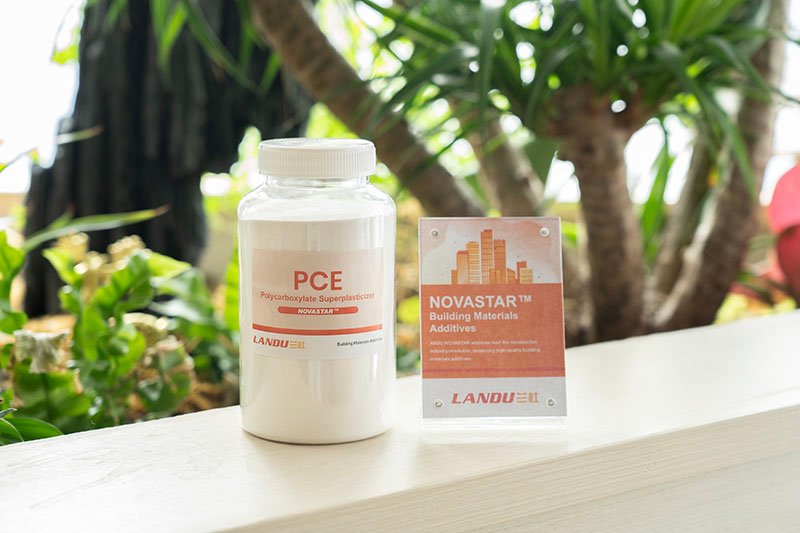
PCE 기반 슈퍼플라스티사이저는 가장 진보된 세대의 혼화제입니다. 이들은 측사슬이 있는 빗 모양의 분자 구조를 가지고 있어 시멘트 입자의 분산과 수화를 제어합니다. 이 구조는 뛰어난 감수제 효과와 우수한 슬럼프 유지력을 제공하며 강도를 희생하지 않습니다.
Advantages:
- Achieves very low water-to-cement ratios.
- Maintains workability for longer periods.
- Reduces cement demand due to improved efficiency.
- Compatible with modern concretes such as self-compacting or high-strength mixes.
High-performance concrete, precast elements, large pours, and sustainable construction requiring precise control over workability and setting time.
나프탈렌계 슈퍼플라스티사이저 (SNF)
나프탈렌 포름알데히드 응축 혼합제는 수십 년 동안 널리 사용되어 왔습니다. 이들은 우수한 수분 감량과 향상된 작업성을 제공하여 일반용 및 프리캐스트 콘크리트 용도에 적합합니다.
Advantages:
- Cost-effective and reliable.
- Provides strong initial workability and strength.
- Suitable for many types of cement.
Limitations:
- Limited slump retention compared to PCE.
- May require higher dosages for extended workability.
Ready-mixed and precast concrete where short transportation or quick placement is required.
멜라민 기반 슈퍼플라스티사이저 (SMF)
멜라민 기반 혼화제는 빠른 초기 강도를 제공하여 빠른 공사 일정이나 추운 기후의 프로젝트에 이상적입니다.
Advantages:
- Rapid strength development.
- Excellent performance in precast and pavement works.
- Good flow at relatively low dosages.
Limitations:
- Shorter workability duration.
- Slightly higher cost compared to earlier-generation admixtures.
Projects demanding early strength, rapid formwork removal, or quick turnaround times.
리그노설폰산염 기반 슈퍼플라스티사이저
리그노설포네이트 혼화제는 자연 목재 부산물에서 유래하며 최초의 가소제 세대를 대표합니다. 성능은 현대 유형에 비해 낮지만, 기본적인 용도에는 경제적인 선택입니다.
Advantages:
- Environmentally friendly and affordable.
- Provides moderate water reduction.
- Easy to use in standard concrete mixes.
Limitations:
- Limited flow improvement and strength gain.
- Less effective in high-performance or high-strength concrete.
Non-structural and general-purpose concrete where cost efficiency is the main concern.
Key Factors to Consider When Selecting a Superplasticizer
The "best" superplasticizer depends on your project requirements, environmental conditions, and mix design
Below are the essential considerations for making an informed choice:
a. Workability and Flow Requirements
The level of fluidity required depends on your concrete's placement conditions. For complex reinforcement, tight formwork, or self-compacting mixes, choose a superplasticizer that provides extended flow retention.
b. Setting Time
Different admixtures influence hydration differently. Select one that suits your construction schedule: for rapid construction, use a faster-setting superplasticizer; for large pours or hot climates, opt for products that extend workability without causing segregation.
c. Strength and Durability Targets
When designing high-strength or high-durability concrete, select an admixture capable of achieving a very low water-to-cement ratio. PCE-based types are most effective in such applications.
d. Compatibility with Cement and Other Admixtures
Cement chemistry affects the performance of superplasticizers. Always perform compatibility tests if other additives like accelerators, retarders, or air entrainers are included in the mix.
e. Environmental Conditions
Temperature, humidity, and wind speed affect setting and workability. In hot climates, use admixtures with better slump retention; in cold climates, use those that support faster strength gain.
f. Economic Considerations
While advanced admixtures like PCE may have higher upfront costs, their efficiency in reducing water and cement content often makes them more cost-effective overall.
Practical Testing and Optimization
대규모 프로젝트에 슈퍼플라스티사이저를 적용하기 전에 현장 및 실험실 시험이 매우 중요합니다.
적절한 테스트는 혼합물이 실제 조건에서 기대한 대로 작동하는지 확인합니다.
Recommended Steps:
- Start with Manufacturer's Recommended Dosage: Use the baseline range provided by the supplier.
- Conduct a Slump Test: Evaluate how easily the mix can be placed and compacted.
- Measure Setting Time and Strength: Adjust dosage to balance flow and early strength.
- Observe Surface Finish and Durability Indicators: Ensure the final concrete is free of segregation and has a dense microstructure.
These trials allow engineers to fine-tune the dosage for optimal performance and avoid waste or inconsistencies.

Common Issues and How to Resolve Them
Even with proper planning, challenges can occur. Here are a few common ones and how to address them:
| Issue | Possible Cause | Solution |
|---|---|---|
| Loss of slump too quickly | Admixture not suitable for temperature or mixing time | Choose a type with extended slump retention |
| Segregation or bleeding | Overdosage or insufficient mixing | Adjust dosage and increase mixing duration |
| Delayed setting | Interaction with other admixtures or high dosage | Reduce dosage or modify admixture sequence |
| Inconsistent results | Variation in cement composition | Conduct compatibility testing with each cement batch |
Proactive testing and supplier guidance help prevent these problems before they impact your project schedule.
랜드우 이점
As a trusted manufacturer of construction chemical additives, Landu has developed a strong reputation for quality, consistency, and innovation. Our superplasticizers are formulated with precision to ensure top-tier performance in various construction conditions.
a. Advanced Technology and Formulation
Landu's polycarboxylate-based technology ensures efficient dispersion, water reduction, and workability retention, supporting the development of high-strength and durable concrete.
b. Consistent Quality
Every batch is produced under strict quality control standards, ensuring reliable results and consistent concrete performance across projects.
c. Technical Support and Collaboration
Landu's technical experts work closely with clients to analyze mix designs, conduct performance testing, and provide tailored recommendations.
d. Sustainable and Cost-Effective Solutions
Landu is committed to developing eco-friendly admixtures that reduce cement and water consumption — lowering both costs and environmental impact.
Applications Across the Construction Industry
Landu's superplasticizers are used in a wide range of applications, including:
Bridges, tunnels, dams, and highways requiring durable and dense concrete.
Beams, panels, and blocks where surface finish and strength are critical.
High-performance structural concrete for foundations, slabs, and columns.
Where flowability and surface finish are paramount.

In each application, the right choice of superplasticizer ensures efficient placement, improved structural integrity, and reduced long-term maintenance costs.
결론
Choosing the right superplasticizer is essential to achieving durable, high-performance concrete. Each type — from PCE to lignosulfonate — has unique strengths suited for different mix designs and construction goals.
With Landu’s advanced formulations and expert support, you can ensure your concrete delivers lasting strength, workability, and sustainability.
문의하기 한국어
한국어  English
  العربية
  Deutsch
  Português do Brasil
  Español de Perú
  Français
  Русский
  Italiano
  Türkçe
  Suomi
Suomi  Nederlands
  日本語
日本語  Português
  Български
  Čeština
  Dansk
Dansk  Ελληνικά
  Eesti
Eesti  Magyar
  Bahasa Indonesia
  Lietuvių kalba
  Latviešu valoda
  Norsk bokmål
  Polski
  Română
  Slovenčina
  Slovenščina
  Svenska
  Українська